GENERIC NAME: TRAMADOL - ORAL (TRAH-muh-dall)
BRAND NAME(S): Ultram
Tramadol is similar to narcotic analgesics. It works in the brain to change how your body feels and responds to pain.
Tramadol is classified as a central nervous system drug usually marketed as the hydrochloride salt (tramadol hydrochloride); the tartrate is seen on rare occasions, and rarely (in the US at least) tramadol is available for both injection (intravenous and/or intramuscular) and oral administration. The most well known dosing unit is the 50 mg generic tablet made by several manufacturers. It is also commonly available in conjunction with APAP (paracetamol, acetaminophen) as Ultracet, in the form of a smaller dose of 37.5 mg tramadol and 325 mg of APAP. The solutions suitable for injection are used in patient-controlled analgesia pumps under some circumstances, either as the sole agent or along with another agent such as morphine.
Availability :
Tramadol comes in many forms, including:
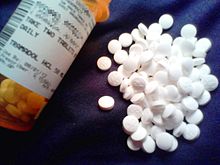 |
| 50 mg Tramadol HCl tablets (generic Ultram) marketed by Akyma Pharmaceuticals. Immediate release tramadol HCl is available in many generic preparations. |
- capsules (regular and extended release)
- tablets (regular, extended release, chewable, low-residue and/or uncoated tablets that can be taken by the sublingual and buccal routes)
- suppositories
- effervescent tablets and powders
- ampules of sterile solution for SC, IM, and IV injection
- preservative-free solutions for injection by the various spinal routes (epidural, intrathecal, caudal, and others)
- powders for compounding
- liquids both with and without alcohol for oral and sub-lingual administration, available in regular phials and bottles, dropper bottles, bottles with a pump similar to those used with liquid soap and phials with droppers built into the cap
- tablets and capsules containing (acetaminophen/APAP), aspirin and other agents.
Tramadol has been regularly used in the form of an ingredient in multi-agent topical gels, creams, and solutions for nerve pain, rectal foam, concentrated retention enema, and a skin plaster (transdermal patch) quite similar to those used with lidocaine.
Tramadol has a characteristic and unpleasant taste which is mildly bitter but much less so than morphine and codeine. Oral and sublingual drops and liquid preparations come with and without added flavoring. Its relative effectiveness via transmucosal routes (i.e. sublingual, buccal, rectal) is similar to that of codeine, and, like codeine, it is also metabolized in the liver to stronger metabolites (see below).
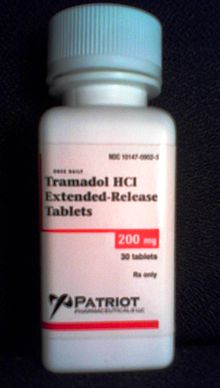 |
| Bottle of 30 tablets of 200 mg extended-release tramadol HCl (generic Ultram ER) marketed by Patriot. Extended-release tramadol is commonly available in 100, 200, and 300 mg strengths to be taken once daily. It is often prescribed with tramadol-APAP (Ultracet) or regular immediate-release tramadol HCl (Ultram/Tramal/Rybix) for breakthrough pain. |
The maximum dosage per day is 400 mg for oral use and 600 mg for parenteral use. Certain manufacturers or formulations have lower maximum doses. For example, Ultracet (37.5 mg/325 mg tramadol/APAP tablets) is capped at 8 tablets per day (300 mg/day) due to its acetaminophen content. Ultram ER is available in 100, 200, and 300 mg/day doses and is explicitly capped at 300 mg/day as well.
Patients taking SSRIs (Prozac, Zoloft, etc.), SNRIs (Effexor, etc.), TCAs, MAOIs, or other strong opioids (oxycodone, methadone, fentanyl, morphine), as well as the elderly (> 75 years old), pediatric (< 18 years old), and those with severely reduced renal (kidney) or hepatic (liver) function should consult their doctor regarding adjusted dosing or whether to use Tramadol at all.
Usage :
Take this medication by mouth as directed by your doctor, usually every 4 to 6 hours as needed for pain relief. You may take this drug with or without food. If you have nausea, it may help to take this drug with food. Ask your doctor or pharmacist about other ways to decrease nausea (such as lying down for 1 to 2 hours with as little head movement as possible).
The dosage is based on your medical condition and response to treatment.
To reduce your risk of side effects, your doctor may direct you to start this medication at a low dose and gradually increase your dose. Follow your doctor's instructions carefully.
The maximum recommended dose is 400 milligrams per day. If you are older than 75 years, the maximum recommended dose is 300 milligrams per day. Do not increase your dose, take the medication more frequently, or take it for a longer time than prescribed. Properly stop the medication when so directed.
Pain medications work best if they are used as the first signs of pain occur. If you wait until the pain has worsened, the medication may not work as well.If you have ongoing pain (such as due to arthritis), your doctor may direct you to also take long-acting narcotic medications.
Side Effetcs :
Other non-narcotic pain relievers (such asacetaminophen, ibuprofen) may also be prescribed with this medication. Ask your doctor or pharmacist if you have any questions about using tramadol safely with other drugs.This medication may cause withdrawal reactions, especially if it has been used regularly for a long time or in high doses. In such cases, withdrawal symptoms (such as restlessness, watering eyes, runny nose, nausea, sweating, muscle aches) may occur if you suddenly stop using this medication. To prevent withdrawal reactions, your doctor may reduce your dose gradually.
Consult your doctor or pharmacist for more details, and report any withdrawal reactions immediately. When this medication is used for a long time, it may not work as well. Talk with your doctor if this medication stops working well. Along with its benefits, this medication may rarely cause abnormal drug-seeking behavior (addiction). This risk may be increased if you have abused alcohol or drugs in the past.
Take this medication exactly as prescribed to lessen the risk of addiction.
Tell your doctor if your pain persists or worsens.
Usage :
Take this medication by mouth as directed by your doctor, usually every 4 to 6 hours as needed for pain relief. You may take this drug with or without food. If you have nausea, it may help to take this drug with food. Ask your doctor or pharmacist about other ways to decrease nausea (such as lying down for 1 to 2 hours with as little head movement as possible).
The dosage is based on your medical condition and response to treatment.
To reduce your risk of side effects, your doctor may direct you to start this medication at a low dose and gradually increase your dose. Follow your doctor's instructions carefully.
The maximum recommended dose is 400 milligrams per day. If you are older than 75 years, the maximum recommended dose is 300 milligrams per day. Do not increase your dose, take the medication more frequently, or take it for a longer time than prescribed. Properly stop the medication when so directed.
Pain medications work best if they are used as the first signs of pain occur. If you wait until the pain has worsened, the medication may not work as well.If you have ongoing pain (such as due to arthritis), your doctor may direct you to also take long-acting narcotic medications.
Side Effetcs :
Other non-narcotic pain relievers (such asacetaminophen, ibuprofen) may also be prescribed with this medication. Ask your doctor or pharmacist if you have any questions about using tramadol safely with other drugs.This medication may cause withdrawal reactions, especially if it has been used regularly for a long time or in high doses. In such cases, withdrawal symptoms (such as restlessness, watering eyes, runny nose, nausea, sweating, muscle aches) may occur if you suddenly stop using this medication. To prevent withdrawal reactions, your doctor may reduce your dose gradually.
Consult your doctor or pharmacist for more details, and report any withdrawal reactions immediately. When this medication is used for a long time, it may not work as well. Talk with your doctor if this medication stops working well. Along with its benefits, this medication may rarely cause abnormal drug-seeking behavior (addiction). This risk may be increased if you have abused alcohol or drugs in the past.
Take this medication exactly as prescribed to lessen the risk of addiction.
Tell your doctor if your pain persists or worsens.
